
Bangkok has an incredible and rapidly expanding fitness scene. From towering commercial gyms overlooking the Sukhumvit skyline to boutique strength studios tucked away in quiet sois, you have more options than ever to get fit. However, having so many choices can easily become overwhelming for expats, locals, and travelers trying to find the right fit. If you want to know how to choose a personal trainer who actually delivers results, you are not alone.
Many people face significant hurdles when trying to find a qualified personal trainer in Bangkok. Language barriers make communication difficult, aggressive sales tactics create unnecessary pressure, and verifying a coach’s actual credentials can feel like guessing. You might find someone who looks the part, but that does not guarantee they know how to design a safe, effective program tailored to your body.
Finding the right fitness professional is crucial for more than just hitting your goals, like building lean muscle or finally losing that stubborn body fat. It is absolutely vital for ensuring your safety, preventing long-term injuries, and creating sustainable habits. A poorly designed program can set you back months, while a science-backed approach will keep you progressing smoothly.
This article provides a comprehensive, step-by-step guide on how to navigate the local fitness market. By the end of this guide, you will know exactly how to evaluate a trainer’s qualifications, understand pricing tiers, spot major red flags, and confidently hire a coach who matches your specific needs.
Step 1: Clarify Your Goals, Budget, and Schedule
Before you start messaging trainers or walking into studios, you must define exactly what you want to achieve. Vague goals like “getting in shape” make it difficult to find a specialist. Instead, you should define highly specific fitness goals. Are you focused on fat loss, muscle hypertrophy, recovering from a shoulder injury, improving your sports performance, or simply improving your overall health and longevity?
Your goal dictates the type of professional you need. For example, if your primary objective is to manage your weight and understand your daily energy needs, you might want to start by using a calorie calculator to set a baseline, then find a coach who specializes in sustainable nutrition and fat loss rather than a bodybuilding competitor.
Next, you need to factor in Bangkok’s unique logistics. Traffic in this city is famously unpredictable. A gym that looks close on a map can take 45 minutes to reach during rush hour. To maintain consistency, you must choose a location with close proximity to a BTS or MRT station, or find a coach who can travel to your private condo gym.
You also need to decide on the training environment that suits your personality and budget.
- Commercial Chains: Large gyms like Fitness First or Jetts offer extensive equipment and convenient locations, but often come with crowded floors and strict in-house trainer policies.
- Boutique Studios: Spaces like BASE Bangkok or Muscle Factory provide a focused, community-driven atmosphere with specialized equipment for strength and conditioning.
- Private Condo Gyms: Utilizing your own building’s gym offers maximum convenience and privacy, provided your trainer is allowed to coach there.
Step 2: Understand Bangkok Personal Trainer Pricing (2026 Guide)
Budget is a major factor when hiring a fitness professional. Understanding the standard personal trainer cost that Bangkok residents typically pay will help you avoid getting overcharged and ensure you get value for your money. Pricing varies widely based on the trainer’s experience, location, and facility type.
Here is a general breakdown of the cost tiers you can expect to see in the city:
- Entry-level (฿300–฿800/session): These are often newer trainers who recently received their certification, or those operating out of very basic, non-air-conditioned facilities. While affordable, they may lack the experience to handle complex injuries or highly specific goals.
- Mid-tier/Certified (฿1,000–฿1,800/session): This bracket consists of experienced professionals with solid international credentials. You will often find these trainers at reputable boutique gyms or working independently. They possess a deep understanding of biomechanics, programming, and nutrition.
- Elite/Specialist (฿2,000–฿3,500+/session): Highly specialized coaches charge a premium. This includes trainers focused on severe injury rehabilitation, advanced sports conditioning for professional athletes, or coaches operating out of five-star luxury hotel gyms.
Several factors heavily influence these prices. Training in premium locations like the Sukhumvit or Silom corridors will naturally cost more due to facility overhead. Additionally, the necessity for an English-speaking personal trainer in Bangkok often places the service in the mid-to-elite pricing tiers, as these professionals usually hold international certifications and cater to the expat and professional markets.
Step 3: Vet Qualifications and Specializations
A great physique does not automatically make someone a great coach. When vetting a potential trainer, you must look beyond their Instagram following and examine their actual credentials. The fitness industry is largely unregulated in many parts of the world, meaning anyone can call themselves a coach.
Look for internationally recognized certifications that indicate a rigorous baseline of competence. Some of the most respected acronyms include:
- NASM (National Academy of Sports Medicine): Focuses heavily on corrective exercise, movement assessment, and building a safe foundation before loading heavy weights.
- ACE (American Council on Exercise): Provides a broad foundation in personal training, with a strong emphasis on behavior change and communication.
- NSCA (National Strength and Conditioning Association): Known for its rigorous CSCS (Certified Strength and Conditioning Specialist) credential, which is highly regarded for athletic performance and advanced strength programming.
- ISSA (International Sports Sciences Association): A globally available certification that covers fitness and nutrition fundamentals.
Beyond fitness credentials, there is an absolute, non-negotiable requirement: your trainer must have an up-to-date CPR/AED and first-aid certification. This readiness is essential for everyone, but particularly crucial for beginners, older adults, or clients with pre-existing medical conditions.
You must also match the trainer’s specialization to your specific goals. Do not hire a powerlifting specialist if your primary objective is postpartum mobility, and avoid coaches who only teach high-intensity interval training if you are recovering from knee surgery. Specialized knowledge ensures your program is safe and effective for your unique body.
Step 4: Evaluate the Coaching Process (The Trial Session)
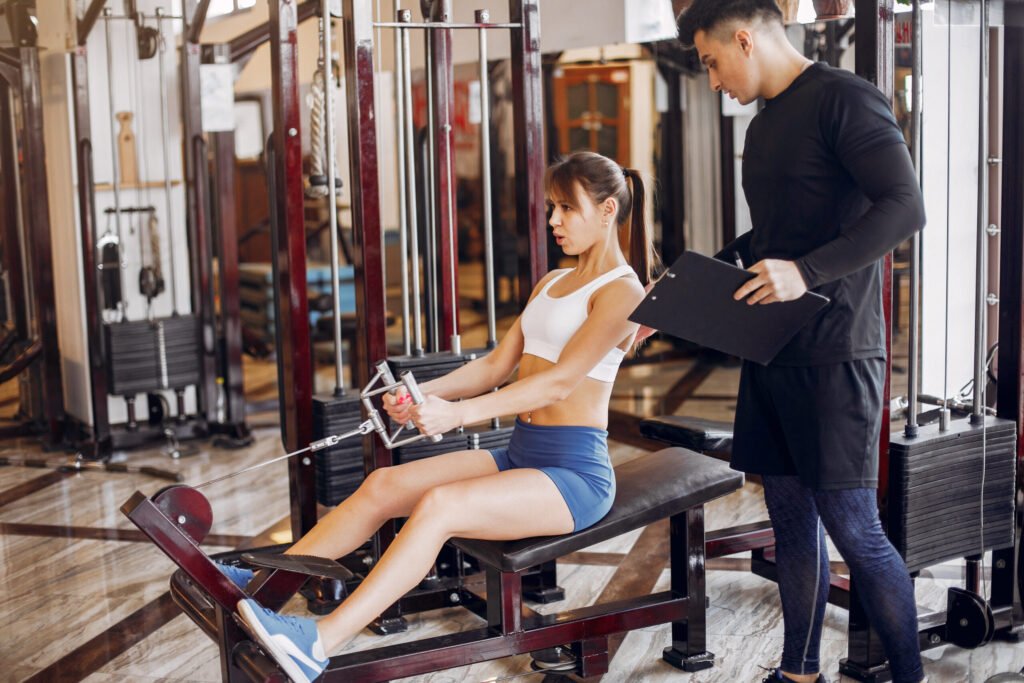
Once you have verified a trainer’s credentials and pricing, it is time to evaluate their actual coaching ability. The best way to do this is by booking a trial session. You might arrange this at your condo gym, or visit one of the best gyms in Bangkok to observe how they operate in a fully equipped environment.
A high-quality initial assessment should never start with a grueling workout that leaves you exhausted on the floor. Instead, expect a thorough health history review. A professional will ask about your past injuries, medical conditions, sleep habits, and daily stress levels. They should then conduct a movement screen; a series of bodyweight exercises like squats or lunges to observe your mobility, flexibility, and any muscle imbalances. Finally, you should have a deep-dive discussion about your goals and constraints.
During this session, listen carefully to how they explain their methodology. They should use foundational, evidence-based training principles explained in simple terms. For example, they might mention “progressive overload,” which simply means safely and gradually increasing the challenge of your workouts over time to force your body to adapt. They should also emphasize “individualization,” meaning your workout is tailored strictly to your specific body mechanics and lifestyle, rather than being copied from a magazine.
Pay close attention to their communication style and coaching cues. Do they explain why you are doing an exercise? Do they correct your form clearly and patiently? A trial session reveals whether your personalities click and if their teaching style matches your learning style.
Step 5: Red Flags and Green Flags
To make your evaluation process easier, use this quick reference guide to spot the signs of a true professional versus an unqualified amateur.
Green Flags (What to look for):
- Consistent Progress Tracking: They bring a notebook or use an app to record your sets, reps, and weights, ensuring you are actually progressing week to week.
- Adaptability: They adjust exercises based on your feedback. If your lower back feels tight, they instantly modify the movement rather than forcing you to push through it.
- Clear Communication: They prioritize explaining proper technique and make sure you feel confident with the movement before adding heavy weights.
- Focus on Sustainability: They encourage realistic lifestyle changes and understand that sleep, stress management, and proper nutrition are just as important as the workout itself.
Red Flags (What to avoid):
- Pain as a Badge of Honor: They push you through sharp discomfort or joint pain, claiming “no pain, no gain.” Sharp pain is a warning sign, not a sign of a good workout.
- Extreme Promises: They guarantee rapid, extreme results, such as promising you will “Lose 10kg in 2 weeks!” Safe, sustainable fat loss takes time.
- Distracted Coaching: They constantly check their phone, text, or look around the gym while you are performing a set. Your safety depends on their full attention.
- The “One-Size-Fits-All” Approach: They offer you a generic program without conducting an initial movement assessment or asking about your medical history.
Step 6: Navigate Bangkok Gym Policies and Hidden Costs
Before you commit to a package of 10 or 20 sessions, you must review the business terms carefully. Bangkok fitness facilities have varying policies, and failing to read the fine print can lead to frustration and wasted money.
First, use a strict checklist to review package terms. Check the expiration dates of your sessions. Do you have three months to use 10 sessions, or just one month? Ask about their 24-hour cancellation policy; most professionals require at least a day’s notice to cancel without charging you for the hour. You should also inquire about package transferability. If you suddenly need to relocate for work or leave the city, can you transfer your remaining sessions to a friend?
Be aware of the “hidden costs” of personal training in Bangkok. If you hire an independent trainer to meet you at a commercial gym, you will likely have to pay a daily gym-pass fee for yourself—and sometimes an entry fee for the trainer—on top of their hourly coaching rate. Always clarify exactly what the hourly rate covers before handing over any money.
Finally, establish clear boundaries regarding data privacy. Your trainer should respect your health information. If they want to take progress photos or record videos of your lifts for their social media marketing, they must ask for your explicit, written consent beforehand.

Final Thoughts and Next Steps
Choosing the right fitness professional requires a bit of upfront research, but the effort pays massive dividends. By clarifying your goals, understanding local pricing, vetting international credentials, and evaluating their coaching process during a trial session, you protect your body and your wallet. Taking the time to thoroughly vet a coach will save you money and prevent debilitating injuries in the long run.
Before you attend your next consultation, take this actionable checklist of questions to ask your prospective trainer:
- “What are your specific certifications, and do you have a current CPR/AED qualification?”
- “How do you track your clients’ progress from week to week?”
- “What is your cancellation policy, and when do these sessions expire?”
- “How do you modify exercises if a client experiences pain?”
If you are ready to start training with a structured, science-backed approach that fits your busy lifestyle, get in touch today to book your consultation and take the first step toward lasting results.